1967 is colloquially known as "the summer of love," the name given to the time when thousands of young people congregated in San Francisco's Haight-Asbury neighborhood.
Musically speaking, fifty years ago the Monkees released their best album, Headquarters, and it hit number one on the album chart June 24, 1967. The week after that, the Beatles' Sgt Peppers' Lonely Hearts Club Band took the top spot and was there for fifteen weeks. Finally, they gave up the top the week of October 28, when the Supremes' Greatest Hits took the top spot and stayed there for 5 weeks. Ironically enough, it was replaced by another Monkees album (Pisces, Aquarius, Capricorn, & Jones, Ltd.).
If you are a fan of Motown in general or of the Supremes in particular, you know that Summer 1967 is an important time for the group, and not because of "love." Today we're going to talk about the events of that epic year.
The last show of the Supremes with their original line-up occurred on July 1, 1967. The first show of the new line-up of the Supremes also occurred on that day. In-between those matinee and evening shows, original member Florence Ballard left the group, and Cindy Birdsong took her place.
Michael Jackson was born on August 29, 1958. If he was still alive, he would turn 58 years old today.
Of course, he died in 2009, a victim of either incompetent doctors or his own hypochondria or some mixture of both. I am not a student of his life by any means; all I know is that he left behind three children and an amazing body of work.
To romanticize his life, it's almost as if it was fated that he would "die young," as, really, he "lived young." He signed with Motown when he was ten years old. By the time he was 12 he had four Number One hits. By the time he was 24, he had the largest selling album of all time.
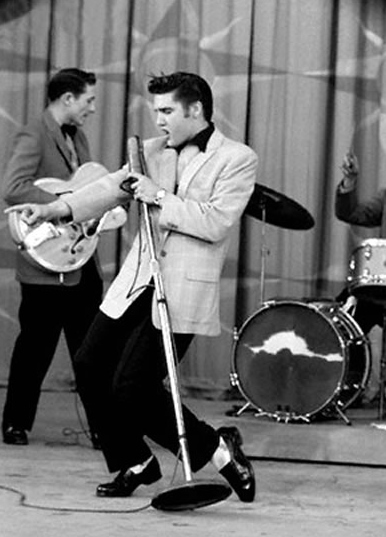
Sixty years ago this week, Elvis Presley began a historical string of 16 weeks at Number One, staying at the top of the US music charts longer than anyone ever had before. He had his third, fourth, and fifth Number One singles, all in a row.
By doing this he was unequivocally crowned The King of Rock And Roll.
On September 20, 1973 Jim Croce died when his private airplane took off badly and crashed into trees outside Natchitoches, Louisiana. He had recently hit it big nationally, with a Number One hit in July called "Bad Bad Leroy Brown." He was only 30 years old.
Fifty years ago this month one of the all-time classic Beatles' songs, "Help!" hit Number One on the US Billboard chart. The song was from the movie of the same name, directed by Richard Lester, who has also directed the Beatles' first film, A Hard Days' Night (1964).
Fifty years ago this month the classic love-song and karaoke standard "I Got You Babe" by Sonny& Cher hit Number One on the Billboard chart. It stayed there for three weeks in August 1965.
Can you name the US Representative from Tennessee who battled against President Andrew Jackson, then lost a re-election bid so moved to the Mexican state of Tejas to help fight for its freedom? Of course you can!
Today marks the anniversary of the day the great state of Missouri joined these United States of America. Missouri was officially admitted as the 24th state on August 10, 1821. That means that The Show Me State is 194 years old today. (Funny, she doesn't look a day over 176). I wonder if there will be a huge party in 2021 to celebrate the bicentennial?
Tony Bennett is 89 years old today.
He is a veteran of World War II, a dedicated pacifist, and the oldest living artist to get a hit on the Billboard Hot 100 chart (his duet with Amy Winehouse, "Body & Soul," reached #87 when he was 85 years old).
Mr. Bennett has won 18 Grammy Awards, including Best Male Vocal Performance, Album of the Year, and a Lifetime Achievement Award.
And he's a hell of a singer.
I didn't like Tony Bennett when I first heard him. His older recordings, which my parents had, were mostly lush orchestrations such as "Because of You" (1951). I basically thought of him as another Perry Como....and this is not a compliment.
Fifty years ago this week, the number one song in the United States was Roy Orbison's "Oh, Pretty Woman."
When I was a freshman in college I got my first credit card. My father co-signed for it, and then told me to buy something relatively cheap with it and then pay it off on the first bill. That way I would start to create a good credit record. I bought the book The Billboard Book of Number 1 Hits by Fred Bronson. And this is where I found out that the week I was born, Roy Orbison was at the top of the chart.The week before the Number One song had been "The House of the Rising Sun" by The Animals.
Here is the actual chart:
1. Oh, Pretty Woman
2. Bread & Butter by The Newbeats
3. House of the Rising Sun
4. (Little) GTO by Ronny & the Daytonas
5. Remember (Walkin' In The Sand) by The Shangri-Las
You can find all of these on youtube if you are interested. If you are a fan of music from this era you will recognize all of them. The point of this post, however, is that every time I hear "Oh, Pretty Woman" I think, "That Number One song is as old as I am!" (I think that about "House of the Rising Sun," too, but that song has less of a pop cultural carbon foot-print than Roy's classic does.)
So to celebrate the 50th anniversary of Roy Orbison's last number one song, here is "Oh, Pretty Woman" written by Roy Orbison and Bill Dees. Hopefully from now on, every time you hear it you'll think of me....well, me and your own pretty woman.
My favorite song from West Side Story depends on how I'm feeling at any given time.
When I lived in Japan I often found myself singing, "America." I would sing "I want to live in America," not only because I embraced the "land of dreams" symbolism, but also because I am aware of the "terrible time in America" cynicism as well. Still, it's a catchy tune with bitingly sarcastic lyrics. And it's such a fun, energetic song! I can listen to it at any time and enjoy it, for sure.
When I'm in the mood to really *listen* to lyrics, my favorite is probably "Officer Krupke." The whole song is full of word-play and rhymes that are simply marvelous. Plus the "message" that juvenile delinquents are good/bad/misunderstood is still timely, more than fifty years after it was originally written. I don't know if that's good, or sad. Either way, there is a lot going on in this song with the lyrics that you won't catch unless you are really listening, and "hip" to the scene. For example, "my grandma pushes tea," confused me for years until I researched that this is actually a marijuana reference (a "pot" of tea). And of course, "no one wants a fella with a social disease" means more than it actually says.
When I'm in the mood to listen to complex music, I listen to "Quintet." I either try to recognize as many musical parts as I can, or I pick one part to try to follow throughout the song. This is the one that I can listen to over and over again and not get tired of it because there is just so much to it.
When I'm in a romantic mood I like "Tonight" or "Somewhere." "Tonight" is the happy "before" romantic ballad, and "Somewhere" is the sad "after" version. "Tonight" is where the lovers enjoy each others' company and look forward to their future rendezvous. "Somewhere" is the more mature lovers' recognition of the obstacles to their love. I like this song very much. As I got older and actually found myself in a bi-racial relationship, I embraced even more the hope and optimism inherent in the song. However, the song as it is sung on the sound-track is not a great version of the song. I would love to find a great cover of this song. I'm surprised that it was never recorded as a duet and released as a single. If you know of a good version, please let me know. Hook me up, daddio!
How can I leave out the other classic songs like "Cool" and "Maria" and "The Jet Song" and "I Have A Love" and "I Feel Pretty"?! These are all great songs, too! West Side Story sound-track on cassette tape was one of the first sound-tracks I ever bought and it is still one of my all-time favorite records.
All songs by Leonard Bernstein and Stephen Sondheim.
Continuing The Adventures of Me in the Gahanna Community Theatre production of THE MUSIC MAN by Meredith Wilson.
We're now in our last week of rehearsals
before the show opens this Friday. Have you gotten your tickets yet?
A shady character going by the name of Professor Harold Hill stops off in River City, Iowa to try to con people out of their money to fund a boys' band. Of course, he has no intention of ever actually starting the band. Problems ensue when he starts to have feelings for the local librarian.
As a member of the chorus I play a citizen of River City. We sing four songs: "Iowa Stubborn," "76 Trombones," "Trouble," and my favorite, "Wells Fargo Wagon." (I've talked about all of these songs except "Trouble," so if you want to hear Robert Preston's THE MUSIC MAN versions of them, search The Theatre thread for the month of January and February and they should pop right up.) As a kid I sometimes would order stickers or model kids from magazines, or I subscribed to comic-books. I *loved* the idea that the mailman or the deliveryman would stop and bring me something cool, delivered right to my door. And this is a fun song all about that phenomenon.
By the way, as a citizen of River City I have ONE line. Here it is in its entirety: "What are you doing about getting our money back!?!"
You'll have to come see me to find out what my cue is to say the line, though.
I've had a lot of fun doing this show, and I hope only two things: (1) that I don't mess up my rat-a-tat "Rock Island" salesman bit at the very beginning, and (2) that I don't trip or otherwise cause myself or others embarrassment. I always say that as long as I am not the least talented person on stage, I'm doing okay.
Oddly enough, in the movie of THE MUSIC MAN the Mayor and Shirley Jones (as the librarian) have their conversation between verse 1 and verse 2. In the stage version, their conversation occurs before the song starts. I wonder why that was changed.
If you want to wish me luck, tell me "break a leg." That is the traditional theatre way of saying, "Good luck."
If you would like to know more about when and where our production will be, please click the Gahanna Community Theatre homepage. or purchase tickets from iTickets here
Continuing The Adventures of Me in the Gahanna Community Theatre production of THE MUSIC MAN by Meredith Wilson.
Rehearsals have picked up in the last week as we run through the entire show every night. The show is Feb 14-16, and so far we have done all staging, blocking (who goes where, and when), and choreography. This week we are going to start working with the orchestra. Things are moving ever forward to Opening Night...!
I am in the very first scene, the "Rock Island" train bit I talked about last time. As soon as that scene ends I need to do a quick costume addition to change from "Salesman #4" to "Iowa Citizen." As soon as the train leaves the station at River City, the chorus goes into the first song, which is "Iowa Stubborn." This is sung by all the townspeople of River City, Iowa when Professor Harold Hill is sizing-up the place for his con. It's an introduction to the "small-mindedness" of small town people. However, Meredith Wilson actually grew up in Iowa. If you listen to the words, it's not so much a criticism of small town people as it is a song TO them.
And we're so by-God stubborn we can stand touching noses for a week at a time and never see eye to eye
is followed by the kicker
But we'll give you our shirt and the back to go with it If your crops should happen to die
You really ought to give Iowa a try.
So it's a fun song to sing with cool lyrics. Also, that bit about helping our fellow man is sung a capello, and we sound pretty good if I do say so myself.
The hardest part of the song for me is the end, where we have to sing several Iowa city names, the vast majority of which I have never heard of!
If you would like to know more about when and where our production will be, please click the Gahanna Community Theatre homepage. or purchase tickets from iTickets here
Continuing The Adventures of Me in the Gahanna Community Theatre production of THE MUSIC MAN by Meredith Wilson.
Last week I was at rehearsal and we went through "Rock Island." This is the very first scene of the show, when a band of traveling salesmen sit around on a train talking about how modern times are making their profession harder. While they are riding from Illinois into Iowa one guy brings up someone named Professor Harold Hill, who is a traveling salesman specializing in selling boys' bands.
This was the first time I had rehearsed this song (for lack of a better word, although there is no music to it) and boy! was it difficult to get down! Not only are the words said to the beat (representing the sound of the train chug-chug-chugging along), but they are said lightning fast. So imagine a duet or song with individual solos, add in difficult lyrics, and keep it to a fast beat. Now you've got the idea of how difficult it is to do "Rock Island."
Luckily (?), I was cast as Salesman No. 4, i.e. "the annoying one." If you know the piece I'm talking about you know one of the salesmen keeps repeating, "Whaddya talk?" This time, that annoying guy is me. So I already know 85% of my lines! Now I just need to remember that I say it five times in a row, then three times in a row, then four times, then five times again, and then twice. You get the idea. If I say it three times but I'm supposed to say it twice, I'll throw the rhythm off. If I say it four times when I'm supposed to say it three times, I'll step on the next guy's line. So....yeah, pressure.
Our musical director and the director of the play both told us (eight guys) to rehearse it over and over again until we have "muscle memory." So I have been singing, "Whaddya talk?" at the CD player for the last few days. My wife thinks I'm crazy.
Here's the scene from the Matthew Broderick ABC-TV version from a few years ago.
There is a place in Illinois on the border with Iowa named "Rock Island" so I guess that is where the name comes. There is a line in the show that says the train has now crossed into Iowa, so it must have started in Illinois.
If you would like to know more about when and where our production will be, please click the Gahanna Community Theatre homepage. or purchase tickets from iTickets here
Forty-six years ago today, Johnny Cash recorded one of the greatest live albums of all time.
Johnny Cash first recorded one of his most famous songs, "Folsom Prison Blues" in 1955. While he was in the Air Force he saw a documentary called, Inside The Walls of Folsom Prison (1951). At about this time he also heard Gordon Jenkins' song "Crescent City Blues." He put both of these experiences together and wrote "Folsom Prison Blues." According to Anecdotage.com, he had this to say about the song's most infamous line ("I shot a man in Reno just to watch him die"): "I sat with my pen in my hand, trying to think up the worst reason a person could have for killing another person, and that's what came to mind."
In the late Sixties, when Cash's career was stalled, he suggested recording a live concert album at a prison. He contacted San Quentin and Folsom, both in California. Folsom agreed to host him, and his entourage, which included his band, the Statler Brothers, Carl Perkins, and June Carter Cash arrived at Folsom on January 13, 1968. They had two concerts, at 9:40 AM and then again at 12:40 PM. They had scheduled two in case the first did not have enough good quality recordings.
The rest, as they say, is history. The morning concert was good enough to nearly fill the album AT FOLSOM PRISON, which was released that spring. It eventually became multi-platinum, with more than three million units sold. The single of a live recording of "Folsom Prison Blues," hit Top Forty on the Pop chart and Number One on the Country chart in the summer of 1968.
Johnny Cash eventually paid Gordon Jenkins a settlement for the similarities between their two songs.
Here's a video of Johnny Cash playing in front of a prison audience. It isn't Folsom (that concert was not taped, just recorded) but it gives you an idea of what it must have been like at the time.
One of the greatest American musicals is THE MUSIC MAN, by Meredith Wilson. He wrote the music and lyrics, and worked with Franklin Lacey on the book. The show premiered on December 19, 1957 off-Broadway and ran through April 15, 1961. At the 1958 Tony Awards it won Best Musical, Best Lead Actor in a Musical (Robert Preston), Best Featured Actress in a Musical (Barbara Cook), and Best Featured Actor in a Musical (David Burns).
The story revolves around con-man "Harold Hill," who travels through the Mid-West taking orders for instruments and uniforms for boys' bands, then skipping town as soon as he gets his money. In River City, Iowa, however, he begins to fall in love with Marian (the librarian) and his plot unravels.
Wilson was born and grew up in Mason City, Iowa. One of the songs, "Iowa Stubborn," is a love-letter to the hard-to-get-to-know people of the Hawkeye State.
In 1962 THE MUSIC MAN was made into a motion picture, produced and directed by the Broadway director, Morton DaCosta. Although Warner Bros purchased the rights, and they had a history of insisting "bigger" names take over the main roles when filming Broadway shows, DaCosta and Wilson both insisted that Robert Preston be cast as Harold Hill in the film. It was his biggest success. Shirley Jones, fresh from OKLAHOMA! and her Academy Award-winning role in ELMER GANTRY, played Marian.
Meredith Wilson was an accomplished songwriter in Hollywood before he began writing musicals. He has also written such well-known songs as "You and I," "It's Beginning To Look A Lot Like Christmas," "May God Bless And Keep You," and "Chicken Fat." Three songs from THE MUSIC MAN have also become very famous: "76 Trombones," "Trouble," and "Til There Was You." The latter was recorded by the Beatles and appears on their US album, MEET THE BEATLES.
The reason I'm writing all this (and you are reading it) is because my local theatre is putting on an amateur version of THE MUSIC MAN in February. I am playing one of the Iowa Citizens, aka "Chorus." So for the next month or so I will be showcasing the songs from this great show.
If you are anywhere near central Ohio on/around Feb 14, check out the Gahanna Community Theatre page and come see me. "You really ought to give (us) a try....!"
First song I'll feature here is one of the most famous, and one that was used as the Finale in the movie. We haven't gotten to that part yet in rehearsals, but I'm guessing it will be our finale, too.
Look closely and you may notice little Ron Howard in the cast as Winthrop. This was after he had started appearing in THE ANDY GRIFFITH SHOW.
Ladies and Gentlemen, "Seventy-Six Trombones (reprise)" from THE MUSIC MAN, words and music by Meredith Wilson.
During the two years that THE MONKEES was on television, they only did one holiday-themed episode: "The Christmas Show," which first aired in the US on December 24, 1967. It's about the Monkees being hired to baby-sit spoiled rich kid (Butch Patrick) while his aunt takes a holiday cruise. The boys at first try to entertain him and then, when they realize he has none, they try to instill a little holiday spirit in him. Butch Patrick, famous as "Eddie" from THE MUNSTERS, resists their efforts. The boys keep at him, however, and he eventually sees the error of his ways, letting a little more love into his heart.
The episode is pure Monkees: an abundance of slap-stick with a thick layer of heart. They mean well. You can certainly see that at this point the show was trying to practice what it preaches: money isn't everything (they lose the money they get for the gig by paying various doctor bills and department store damages), but Love is. Also, Love saves the day. It still holds up, some 40 plus years later.
The episode ends with a beautiful a capella version of a 16th century Spanish song, "Riu Chiu." I researched this song and it is about the birth of Jesus. I have never heard this song before or since, but evidently it is a well-known folk or chorus song. It's a beautiful tune, and with this performance alone doubters should stop hating the Monkees. They are obviously singing here, and singing well.
If you want to read the lyrics or see a translation, visit this Tradition In Action homepage.
There is an interesting story about "Last Train to Clarksville," the Monkees' first Number One hit it the US. Writers Tommy Boyce and Bobby Hart came up with the song in the summer of 1966. In The Monkees by Andrew Sandoval, Hart is quoted as saying, "As I was pulling into my carport I was punching the radio stations and I heard just the tail end of "Paperback Writer" for the first time....I thought they were saying, 'take the last train....' to something. Then of course a couple of days later I heard the whole song and I realized it wasn't about a train....So, I just had it in the back of my mind. Then we were coming down to the end of producing the first album and we needed another song or two. So I said I had this idea and Tommy and I got together and did it really quickly. "
The song was released on August 16, and by the week of November 5, 1966 it was Number One.
When I was a kid I was not a huge fan of this song; maybe because they played it all the time. I liked more of the Monkees' less popular songs. Now, though, I really like it. Did you ever happen to notice that it's about a guy meeting up with his girlfriend before he gets shipped off, presumably to Vietnam? It's actually a pretty deep song about loneliness, duty, and love. Give it a listen.
Because of three very important events that occurred in the history of the super-group The Monkees in the month of December, we are going to be celebrating the group ALL MONTH LONG!
First of all, a brief introduction. When The Beatles hit big (they were huge, by the way) they made a movie called A Hard Day's Night. This Richard Donner film about the daily lives of pop stars was also a huge success. Producers Bob Rafelson and Bert Schneider decided to come up with a similar idea for US television. So on September 8, 1965 they placed an ad in Daily Variety for an open audition for musicians and singers for acting roles. Eventually they chose David Jones, Mickey Dolenz, Peter Tork, and Michael Nesmith. The series The Monkees premiered in September 1966 on NBC-TV, and the world would never be the same.
The Monkees recorded as a pseudo-real rock band and eventually became a real presence in the musical world. They had a dozen popular songs and three Number One USA songs: Last Train to Clarksville, Daydream Believer, and one of my all-time favorite songs, I'm A Believer. It was originally written by Neil Diamond (check out *his* version of this song here if you're a Neil Diamond fan) but the Monkees made it their own. It premiered on The Monkees TV show and was released in the fall of 1966; it hit the top spot in December 1966 and was Number One for seven weeks, making it in some lists I've seen the Number One Hit of 1966.
Today is Joe DiMaggio's birthday. The baseball superstar, who died in 1999, would have been 99 years old today.
For a generation of Americans, he was the center fielder for the New York Yankees (1936-1951). For another generation of Americans, he is most famous for being married to Marilyn Monroe in 1954 (the marriage lasted less than a year). And for yet another generation, he is known most famously as the spokesperson for Mr. Coffee coffee-makers.
Among music lovers, Joe DiMaggio is known as all those things AND as a lyric in the 1968 Simon & Garfunkel hit, "Mrs. Robinson."
The song first appeared in the Mike Nichols directed film The Graduate (1968). Nichols wanted new S&G songs in the film, but used already-written songs as "place-holders" until Paul Simon could supply new ones. However, Simon ended up being too busy touring to write new songs for the film. Desperate, Nichols asked if Simon had anything available. Simon told him that all he had was a bit of something called "Mrs. Roosevelt" about the 1940s, Joe DiMaggio, and the past. Nichols grabbed it, changing the subject from "Roosevelt" to "Robinson."
The lyrics that Paul Simon eventually wrote about Joe DiMaggio for the Number One song are as follows:
Sitting on a sofa on a Sunday afternoon
Going to the candidates' debate
Laugh about it, shout about it
When you've got to choose
Every way you look at it you lose.
Where have you gone, Joe DiMaggio?
A nation turns its lonely eyes to you
What's that you say Mrs. Robinson
Joltin' Joe has left and gone away.
So why does Joe DiMaggio appear in a song nominally about an older woman having an affair with the neighborhood boy? After Nichols grabbed the song for the film, Simon decided to leave Joe DiMaggio in. He used the celebrity as a representative of the strong, silent, classy type of "hero" that was in short supply in 1968. Specifically, although DiMaggio had been married to Marilyn Monroe, he never spoke of her or tried to make any money off of their relationship. Simon considered that classy.
To read Paul Simon's own comments about Joe DiMaggio, read his Op-Ed from the New York Times from 1999.
And here is the classic song, by Simon & Garfunkel, circa 1968.